


Bispecific Cancer Therapy
Bispecific antibody therapy is an innovative type of immunotherapy that helps your immune system better recognize and attack cancer. Unlike traditional immunotherapies, which generally boost the immune system, bispecific antibodies take a more targeted approach by linking immune cells to cancer cells, allowing them to eliminate cancer more effectively.
At SCRI Oncology Partners, we are excited to offer this new category of cancer treatment to our patients in the Nashville area. We are also participating in clinical trials researching new ways to use these drugs to help more patients. When appropriate, our oncologists will include bispecific therapy in a personalized treatment plan.
Differentiators
Side Effects
Advancements
How does bispecific antibody therapy work?
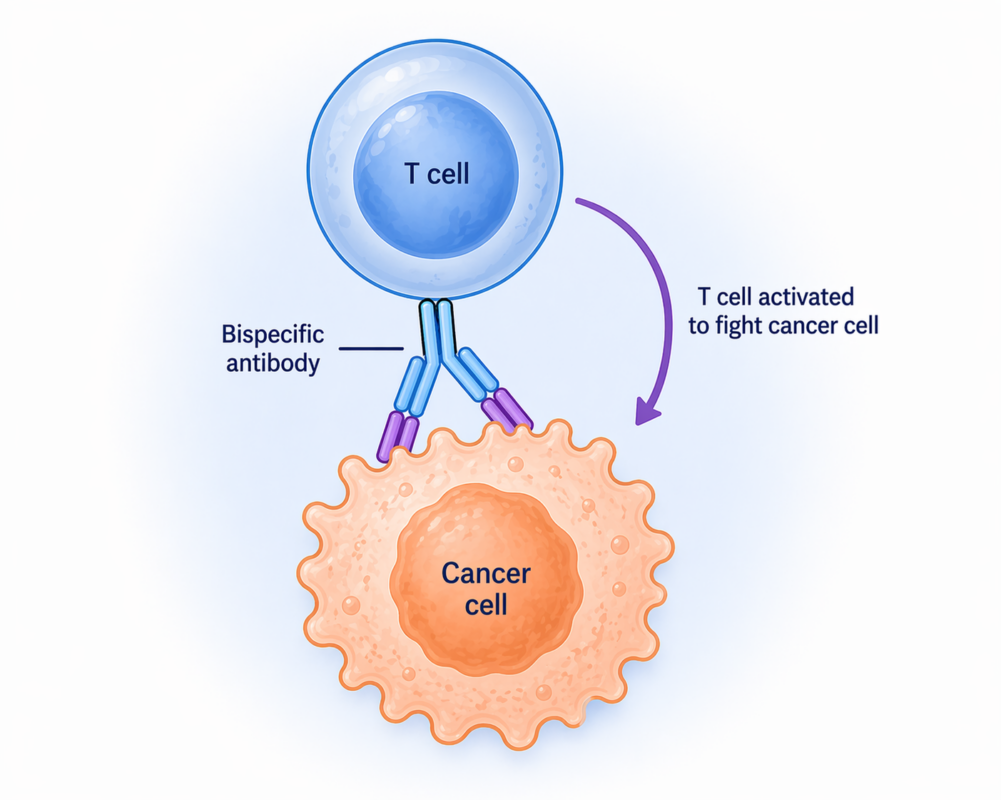
Bispecific antibody therapy acts like a bridge between the immune system and cancer by using its “arms.”
One arm of the antibody targets a specific marker (antigen) on the surface of cancer cells. The other arm attaches to an immune cell capable of killing cancer cells, commonly a T cell. When T cells are activated, they help to attack the cancer cells.
This process connects the T-cells to their targets, speeding up and improving the immune response.
What sets bispecifics apart from other cancer treatments?
Bispecific antibody therapy differs from other cancer treatments in several unique ways:
- Targeted precision – These therapies are designed to recognize specific markers on cancer cells, meaning healthy cells are usually unharmed, unlike traditional chemotherapy, which affects both cancer cells and healthy cells.
- Stronger immune response – While some immunotherapies, like checkpoint inhibitors, help T cells break through barriers to attack cancer, bispecific antibodies take it a step further by actively bringing T cells and cancer cells together.
- No lab modification needed – Bispecific antibodies don’t require removing and modifying a patient’s cells in a lab, unlike some other immunotherapies. This often means treatment can begin sooner.
- Off-the-shelf treatment – Unlike chimeric antigen receptor (CAR) T-cell therapy, which requires custom tailoring for each patient, bispecific therapies are pre-made and ready to use.
What types of cancer can be treated with bispecific antibodies?
The FDA has approved bispecific therapy for blood cancers, including multiple myeloma, lymphomas, and acute lymphoblastic leukemia (ALL). It’s also approved for use in some solid tumors such as non-small cell lung cancer, small cell lung cancer, cervical cancer, and ocular melanoma.
Many clinical trials are underway to see how bispecific therapy can be used for other types of cancer, such as breast, prostate, gastrointestinal, and kidney cancers. Research is also examining the potential benefits of combining bispecifics with other cancer-fighting therapies to improve outcomes.
Your care team at SCRI Oncology Partners is dedicated to bringing you the most advanced cancer treatments available today. We will review this as a treatment option and discuss whether bispecific antibody therapy is an option for your specific diagnosis.
How is bispecific antibody therapy administered?
Bispecific antibody therapy is usually administered through an intravenous (IV) infusion, but it can also be given as an injection under the skin, called subcutaneous (SC).
The treatment typically involves several phases. Often, treatment is started with smaller doses to minimize side effects, also called step-up dosing. Your healthcare team may provide additional medicines, such as steroids and fluids, to help prevent side effects. Usually, bispecific treatments can be given in an outpatient setting, but some patients may need to stay in the hospital for a short time for monitoring. Follow-up doses are scheduled, usually every one to three weeks, depending on the patient’s diagnosis.

Side effects of bispecific cancer therapy
As with most cancer-fighting therapies, bispecific antibody therapy can cause side effects. They are typically different than the side effects of chemotherapy, but should not be ignored. Talk with your SCRI Oncology Partners team if you’re experiencing any of these, so we can assist you with managing them.
Cytokine release syndrome (CRS) is a common side effect of bispecific antibody therapy caused by activation of the immune system and release of proteins called cytokines. It is more likely to occur during or after the first few doses of treatment and is usually mild and temporary. Symptoms may feel similar to the flu and can include fever, chills, headache, low blood pressure, rapid heart rate, rash, and changes in breathing.
Some patients develop immune effector cell-associated neurotoxicity syndrome (ICANS), a temporary condition that affects the brain and nervous system. Symptoms may include confusion, difficulty concentrating, memory problems, slowed reactions, personality changes, fatigue, numbness in the hands or feet, trouble speaking, and, in severe cases, loss of consciousness.
Infections are more common because the immune system is changed using bispecific antibody therapy. You may be more susceptible to bacterial, viral, and fungal infections due to reduced healthy immune cells and infection-fighting antibodies. Common infections include colds, flu, COVID-19, pneumonia, urinary tract infections, and yeast infections. Some patients may receive preventive medications or intravenous immunoglobulin (IVIg) to help reduce this risk.
Given these unique side effects, patients will often be monitored very closely when starting bispecific antibody therapy, and with time, the risk of CRS and ICANS diminishes.
Other side effects are possible, such as fatigue, changes in liver function, loss of appetite, jaundice, dry skin, dry mouth, and brittle or discolored nails. Discuss any side effects you notice with your care team so we can help you manage symptoms most effectively.
How is SCRIOP advancing bispecific antibody therapy?
SCRI Oncology Partners is dedicated to leading the way in cancer care through active involvement in clinical research. Through our collaboration with Sarah Cannon Research Institute, our team plays a key role in evaluating new and emerging treatments, including bispecific antibody therapies and newer, similar types of therapies called trispecific antibody therapies.
Clinical trials provide our patients with access to innovative therapies that are not yet widely available, as well as new treatment combinations aimed at improving outcomes. Ongoing research also helps doctors identify which patients are most likely to benefit from these advanced therapies.
Our commitment to research ensures that patients in the Nashville area have access to cutting-edge cancer treatments close to home.
We’re here when you need us
If you were recently diagnosed or would like a second opinion, request an appointment with one of our experienced cancer doctors right here in Nashville.
We’re here when you need us
If you were recently diagnosed or would like a second opinion, request an appointment with one of our experienced cancer doctors right here in Nashville.
We’re here when you need us
If you were recently diagnosed or would like a second opinion, request an appointment with one of our experienced cancer doctors right here in Nashville.